Oct 26, 2026Import & Shipping Guide
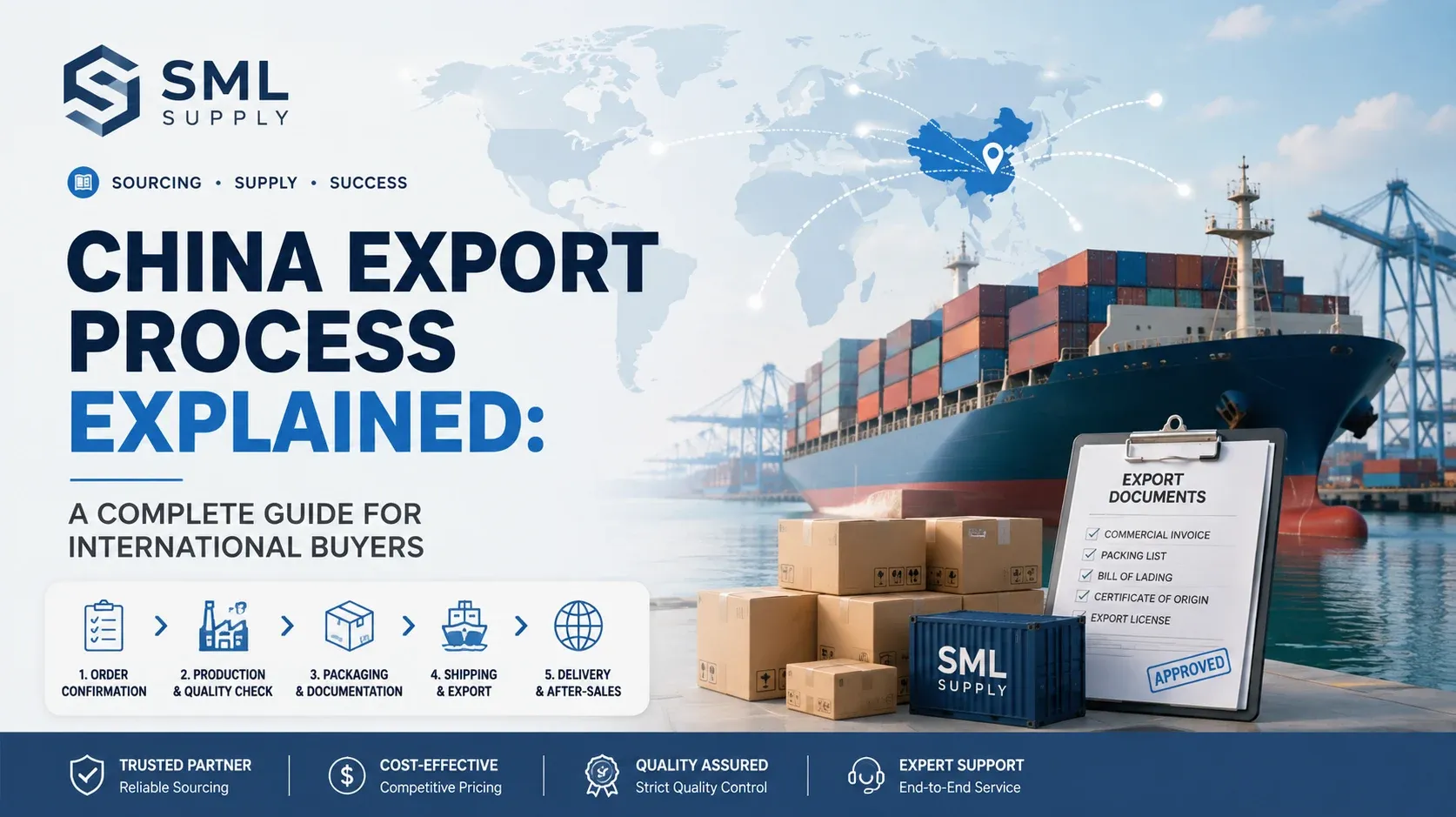
China Export Process Explained: A Complete Guide for International Buyers
Learn how the China export process works, covering production, inspection, export documents, shipping, and delivery steps for global buyers sourcing products from China.
Author: Connor Ma, Founder of SML Supply
After finding suitable suppliers and completing product manufacturing, international buyers need to understand how products move from China factories to their destination markets.
The China export process involves multiple steps, including production coordination, quality inspection, export documentation, shipping arrangements, and delivery management.
For global buyers, understanding the export process helps reduce delays, avoid documentation problems, and create a smoother international sourcing experience.
Based on our experience supporting buyers with China sourcing projects, successful export coordination requires clear communication between suppliers, logistics partners, and buyers throughout the entire process.
What Is the China Export Process?
The China export process refers to the series of steps required to prepare, document, and ship products from China to international markets.
A typical export process includes:
- Production completion
- Product inspection
- Packaging preparation
- Export documentation
- Freight arrangement
- Customs clearance
- Final delivery
The exact process may vary depending on product category, destination country, shipping method, and buyer requirements.
For buyers who are new to international sourcing, understanding the complete China sourcing process can help create better planning and communication with suppliers.
Step 1: Confirm Production Completion and Product Details
Before shipment, buyers and suppliers should confirm that products meet the agreed requirements.
Important checks include:
- Product specifications
- Quantity confirmation
- Packaging details
- Label requirements
- Shipping schedule
A clear production confirmation helps prevent problems after manufacturing is completed.
For customized products, buyers should make sure that samples, specifications, and final production details have been approved before shipment.
Step 2: Conduct Product Inspection Before Shipment
Quality inspection is an important step before exporting products from China.
Depending on the project requirements, inspections may include:
Product Appearance Check
Review:
- Product condition
- Finishing quality
- Color consistency
- Packaging appearance
Quantity Verification
Confirm:
- Ordered quantity
- Carton quantity
- Product counting accuracy
Specification Check
Verify:
- Materials
- Dimensions
- Product details
- Customer requirements
A proper inspection process helps buyers identify potential issues before products leave China.
Step 3: Prepare Export Documents
Export documentation is necessary for international shipments.
Common documents include:
Commercial Invoice
A commercial invoice provides transaction details between seller and buyer.
It usually includes:
- Product description
- Quantity
- Unit price
- Total value
- Seller and buyer information
Packing List
A packing list provides shipment details, including:
- Carton information
- Package quantity
- Product weight
- Product dimensions
Bill of Lading or Shipping Documents
Shipping documents provide transportation information and are required during international logistics procedures.
Certificate of Origin (When Required)
Some countries require certificates of origin to confirm where products are manufactured.
Documentation requirements may vary depending on destination regulations and product categories.
Step 4: Arrange Shipping From China
After export documents are prepared, buyers need to arrange transportation.
Common shipping methods include:
Sea Freight
Sea freight is commonly used for:
- Large quantities
- Heavy products
- Cost-sensitive shipments
Advantages:
- Lower transportation cost
- Suitable for bulk orders
Air Freight
Air freight is suitable for:
- Urgent shipments
- Samples
- Smaller quantities
Advantages:
- Faster delivery time
Express Shipping
Express services are commonly used for:
- Samples
- Small packages
- Documents
The best shipping method depends on:
- Order volume
- Delivery requirements
- Budget
- Destination
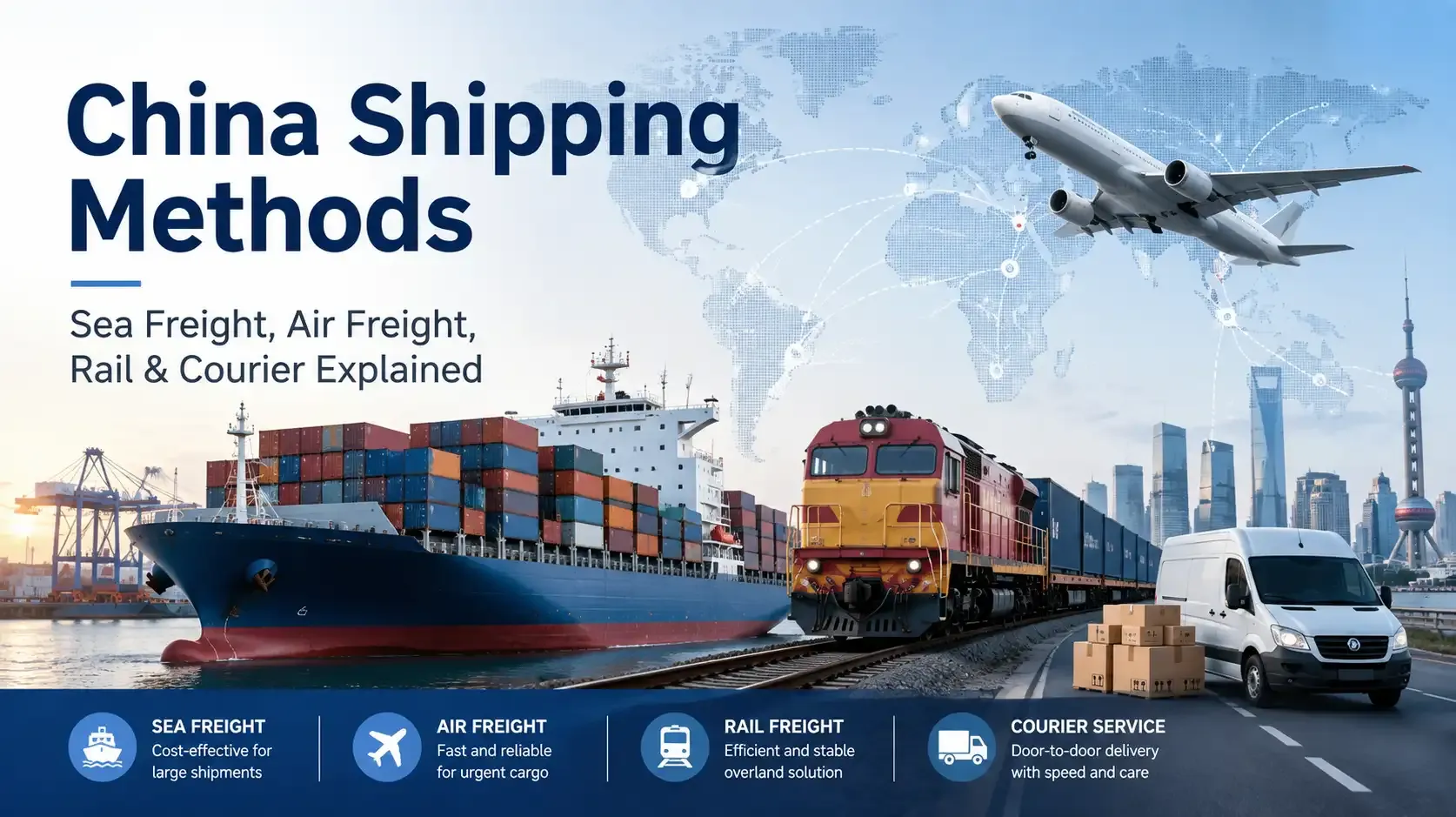
For a more detailed comparison of sea freight, air freight, rail freight and courier services, read our China Shipping Methods guide.
Step 5: Customs Clearance and Final Delivery
After products leave China, shipments need to pass import procedures in the destination country.
Buyers should prepare for:
- Import requirements
- Customs duties
- Local regulations
- Delivery arrangements
Working with experienced logistics partners can help reduce delays and improve shipment efficiency.
Common Challenges During China Export
Although China has a mature export system, international buyers may still face challenges.
Documentation Errors
Incorrect documents can cause:
- Customs delays
- Additional costs
- Shipment problems
Communication Issues
Poor communication between suppliers, logistics companies, and buyers may affect:
- Shipping schedules
- Documentation accuracy
- Delivery expectations
Packaging Problems
Incorrect packaging may result in:
- Product damage
- Higher shipping costs
- Warehouse issues
Unexpected Shipping Delays
Delays may occur because of:
- Port congestion
- Weather conditions
- Customs inspections
- Logistics issues
Proper preparation and communication can reduce these risks.
How to Improve Your China Export Process
International buyers can improve export efficiency by:
Confirming Requirements Early
Before production starts, confirm:
- Product specifications
- Packaging requirements
- Shipping expectations
- Required documents
Maintaining Clear Communication
Regular communication helps all parties understand:
- Production progress
- Inspection results
- Shipping schedules
Working With Experienced Partners
Experienced sourcing partners can help coordinate:
- Supplier communication
- Quality inspection
- Export preparation
- Logistics arrangements
How SML Supply Supports China Export Coordination
Managing suppliers, quality checks, and export arrangements can be challenging for international buyers, especially when working remotely.
SML Supply supports global buyers by helping coordinate:
- Supplier communication
- Production updates
- Product inspection coordination
- Export preparation
- Shipping arrangements
With China-based sourcing experience and supplier coordination capabilities, we help buyers create a more efficient sourcing and export process.
Conclusion
Understanding the China export process helps international buyers manage sourcing projects more effectively.
From production confirmation and quality inspection to export documentation and shipping coordination, every step plays an important role in successful delivery.
A reliable sourcing partner can help buyers communicate with suppliers, coordinate production, and reduce challenges throughout the export process.
If you need support managing suppliers and export coordination in China, you can request sourcing support from SML Supply.
Author: Connor Ma, Founder of SML Supply
Connor Ma has over 10 years of experience in China manufacturing and international sourcing. Through SML Supply, he supports global buyers with supplier coordination, product development, quality management, and export solutions from China.