Oct 26, 2026China Sourcing Guide
China Sourcing Process Explained: A Complete Guide for Global Buyers
Learn how the China sourcing process works, from supplier search and product development to quality control and export. A practical guide for global buyers.
Introduction: Understanding the China Sourcing Process
For many global buyers, sourcing products from China offers significant advantages, including competitive manufacturing costs, flexible production capabilities, and access to a wide range of suppliers.
However, successful sourcing requires more than simply finding a factory and placing an order.
A reliable China sourcing process involves multiple stages, including supplier research, product evaluation, sample development, quality control, and export coordination.
Without a structured sourcing process, buyers may face challenges such as inconsistent product quality, communication issues, production delays, or unsuitable suppliers.
This guide explains the complete China sourcing process and how international buyers can manage each stage effectively.
What Is the China Sourcing Process?
The China sourcing process refers to the complete workflow of finding suppliers, developing products, managing production, and arranging shipment from China to international markets.
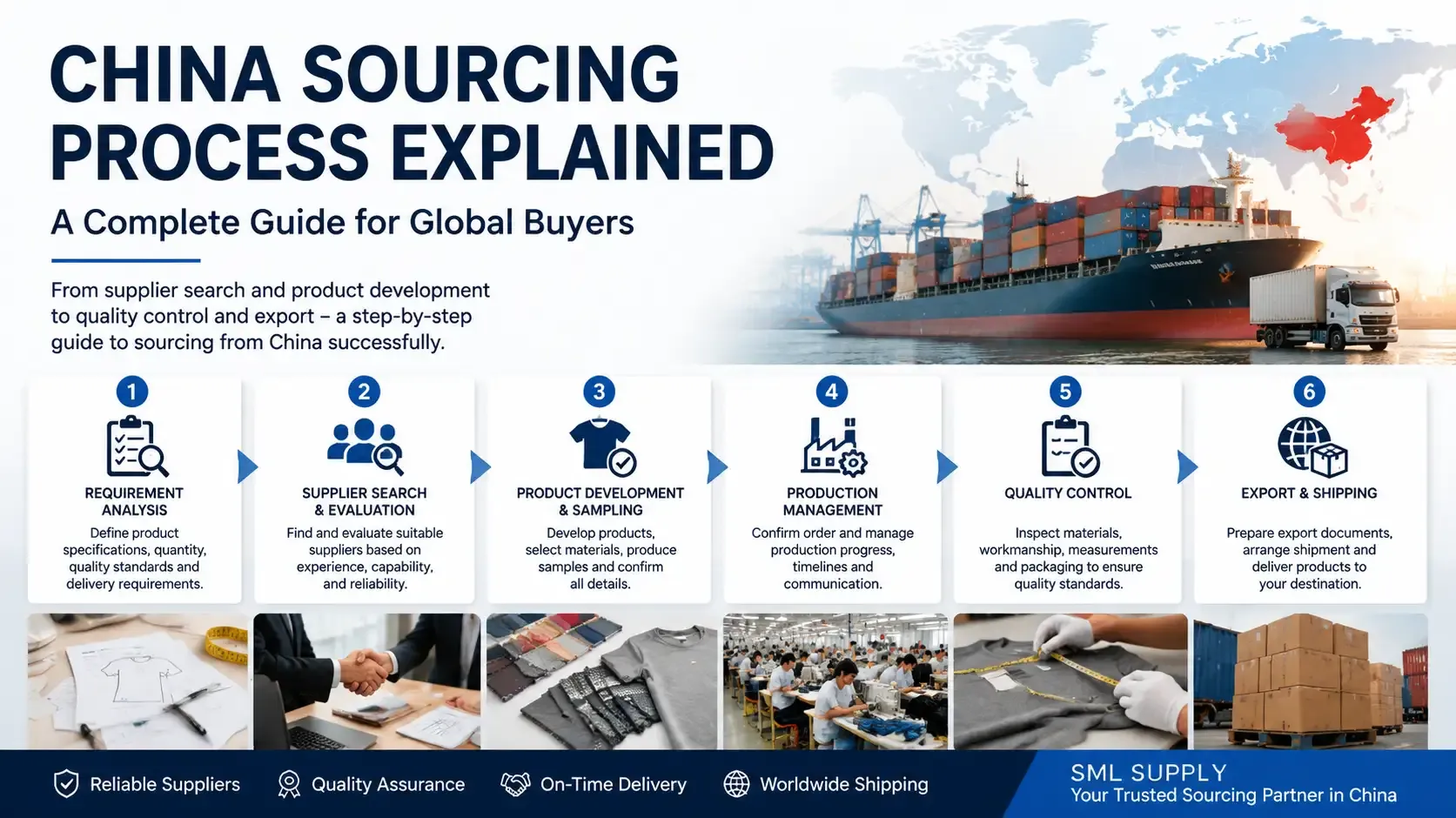
A typical sourcing process includes:
- Requirement analysis
- Supplier research and evaluation
- Product development and sampling
- Order confirmation and production management
- Quality inspection and control
- Export documentation and shipment coordination
Each stage plays an important role in reducing sourcing risks and ensuring successful cooperation between buyers and Chinese suppliers.
Step 1: Define Your Product Requirements
Before contacting suppliers, buyers should clearly define their product requirements.
A detailed product brief helps suppliers understand expectations and provide accurate solutions.
Important information includes:
Product Category
Define the type of product you need, such as:
- Apparel
- Knitwear
- Hoodies
- T-shirts
- Loungewear
- Accessories
- Custom products
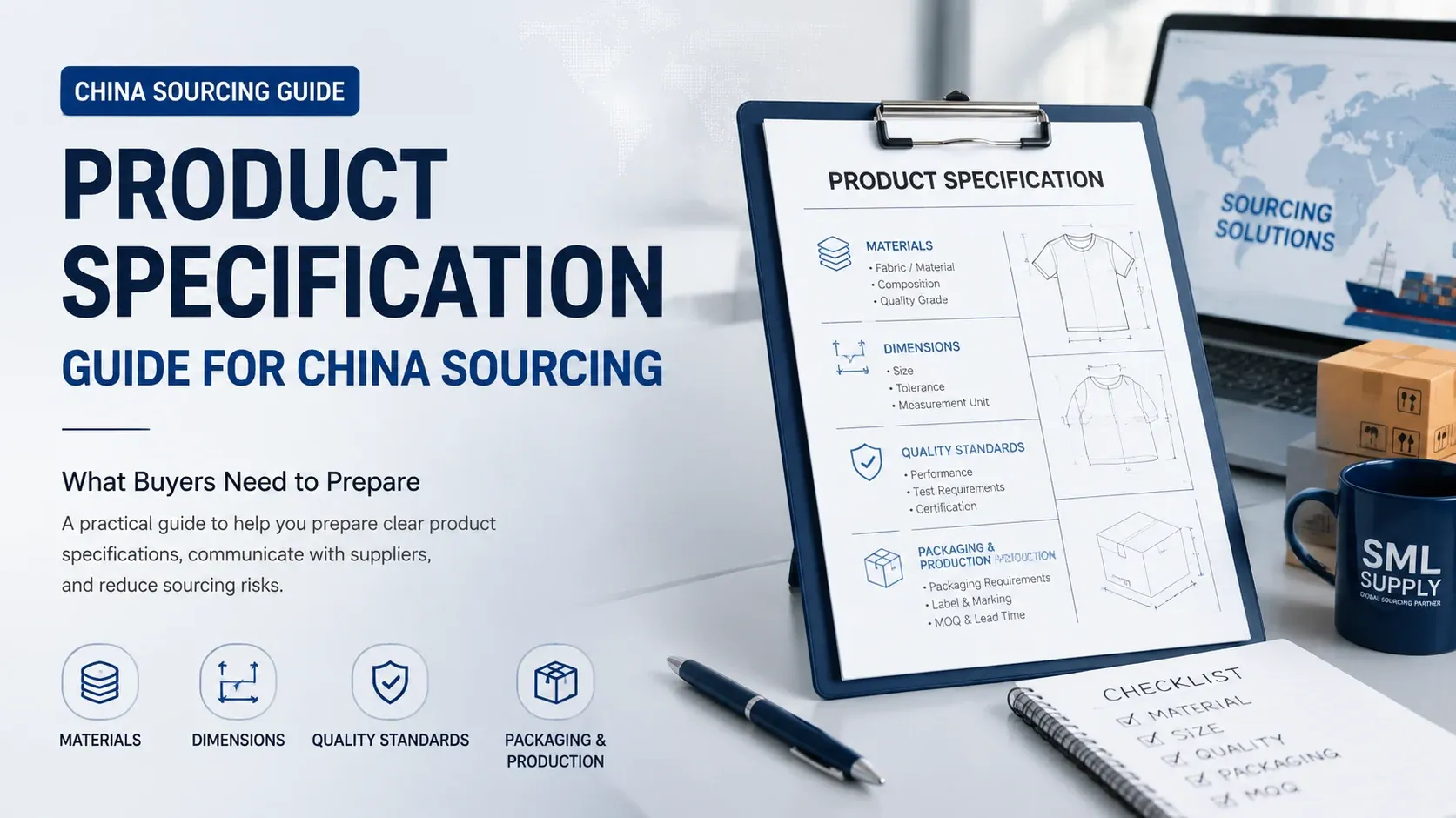
Product Specifications
Provide details such as:
- Materials and fabric requirements
- Product dimensions
- Color options
- Design references
- Packaging requirements
- Quality standards
Order Requirements
Suppliers usually need information about:
- Estimated order quantity
- Target price range
- Production timeline
- Destination market
Clear requirements help avoid misunderstandings during the sourcing process.
Step 2: Find and Evaluate Suitable Suppliers in China
Finding suppliers is one of the most important steps in China sourcing.
Not every supplier is suitable for every buyer.
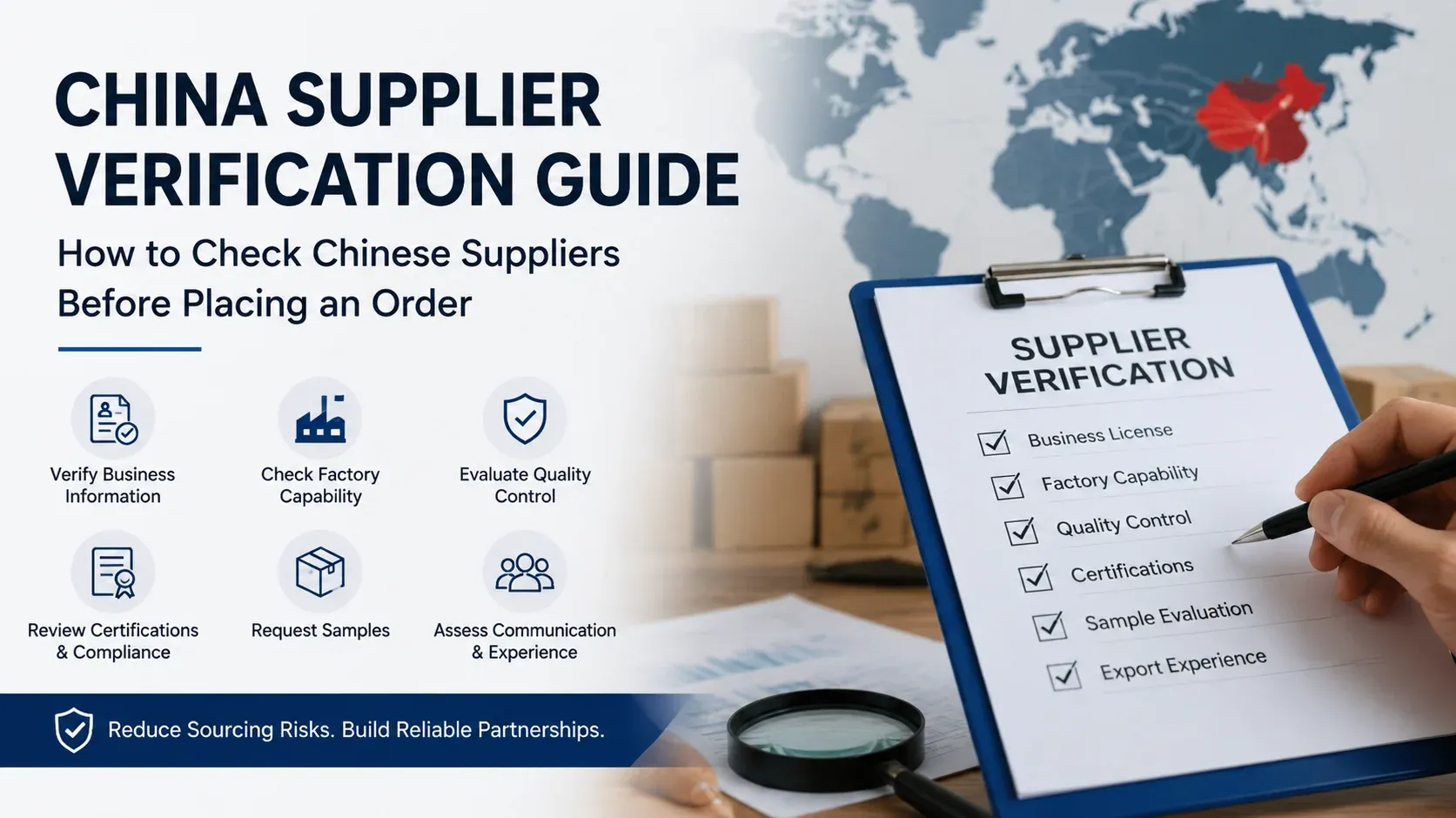
A reliable supplier evaluation should include:
Business Verification
Check:
- Company registration information
- Business experience
- Export capability
- Product specialization
Manufacturing Capability
Evaluate:
- Production equipment
- Factory capacity
- Workforce experience
- Product categories
Quality Management
Understand:
- Quality control procedures
- Inspection methods
- Material testing
- Production standards
Communication Ability
Effective communication is essential for international cooperation.
A good supplier should be able to:
- Understand buyer requirements
- Provide professional suggestions
- Respond efficiently
- Manage production updates
For more details, buyers can also refer to our guide:
China Supplier Verification Guide: How to Check Chinese Suppliers Before Placing an Order
Step 3: Product Development and Sample Approval
Before starting mass production, professional buyers usually request samples.
The sampling stage allows buyers to confirm:
- Product design
- Material selection
- Size and measurements
- Construction details
- Packaging requirements
For custom products, the development process may include:
Design Review
Suppliers review:
- Technical drawings
- Reference samples
- Product specifications
Material Selection
Fabric and material selection can significantly affect:
- Product quality
- Cost
- Appearance
- Customer satisfaction
Sample Modification
Based on feedback, suppliers adjust:
- Fit
- Construction
- Color
- Details
Sample approval helps reduce production risks before bulk orders begin.
Step 4: Order Confirmation and Production Management
After sample approval, buyers and suppliers confirm final production details.
This usually includes:
- Final product specifications
- Order quantity
- Production schedule
- Packaging requirements
- Payment terms
During production, buyers should maintain communication with suppliers.
Production follow-up may include:
- Tracking manufacturing progress
- Confirming production milestones
- Solving unexpected issues
- Checking quality requirements
Professional sourcing management helps ensure orders are completed according to expectations.
Step 5: Quality Control Before Shipment
Quality control is a critical part of the China sourcing process.
Before shipment, products should be checked according to buyer requirements.
Common quality checks include:
Material Verification
Confirm:
- Fabric composition
- Material specifications
- Required certifications
Product Appearance Inspection
Check:
- Workmanship
- Sewing quality
- Product finishing
- Defects
Measurement Checking
Verify:
- Product dimensions
- Size accuracy
- Technical specifications
Packaging Inspection
Confirm:
- Labels
- Packaging requirements
- Shipping preparation
A proper quality control process helps reduce product issues after delivery.
Step 6: Export Documentation and Shipment Coordination
The final stage of sourcing is preparing products for international delivery.
Export support may include:
- Commercial invoice preparation
- Packing list confirmation
- Product information documents
- Shipment coordination
Buyers should confirm:
- Shipping method
- Delivery timeline
- Destination requirements
- Import regulations
Good export coordination helps ensure smoother international shipments.
Common Challenges When Sourcing from China
Finding the Wrong Supplier
Some suppliers may not have the required production capability.
Solution:
Conduct supplier verification before cooperation.
Poor Communication
Language differences and unclear requirements can create problems.
Solution:
Provide detailed product information and maintain regular communication.
Quality Differences Between Samples and Bulk Production
Some buyers experience differences between approved samples and final products.
Solution:
Establish clear quality standards and production follow-up procedures.
Delayed Production
Unexpected production issues may affect delivery schedules.
Solution:
Monitor production progress and confirm important milestones.
How SML Supply Supports Global Buyers
At SML Supply, we help international buyers manage the China sourcing process through supplier coordination, product development, quality control support, and export assistance.
Our sourcing support includes:
Supplier Matching
Helping buyers identify suitable manufacturers based on:
- Product category
- Quality requirements
- Order volume
Product Development
Supporting:
- Custom product development
- Sample coordination
- Production communication
Quality Control Support
Helping buyers manage:
- Production follow-up
- Quality requirements
- Inspection coordination
Export Support
Supporting:
- Documentation preparation
- Shipment coordination
- Supplier communication
Our goal is to help global buyers build reliable and efficient supply chains in China.
Conclusion: Build a Reliable China Sourcing Process
A successful China sourcing project requires careful planning, supplier evaluation, product development, and quality management.
Instead of focusing only on price, global buyers should consider supplier reliability, communication ability, production capability, and long-term cooperation potential.
With the right sourcing process and professional support, businesses can reduce risks and build stronger partnerships with Chinese suppliers.
About the Author
Connor Ma
Founder of SML Supply
Connor Ma is the Founder of SML Supply, a China-based sourcing and apparel manufacturing company supporting global buyers with supplier coordination, product development, quality control, and export solutions.
Through SML Supply, Connor works with international brands, retailers, and importers looking for reliable sourcing solutions from China.
About SML Supply
SML Supply is a China-based sourcing partner helping global buyers find reliable suppliers, develop customized products, manage quality requirements, and coordinate export processes.
Learn more about our:
- Supplier Network