Oct 26, 2026China Sourcing Guide
OEM vs ODM Manufacturing Guide: How Global Brands Choose the Right Production Model in China
Explore OEM vs ODM manufacturing in China and learn how apparel brands choose the right production model for custom clothing, private label, and product development.
Introduction: Choosing the Right Manufacturing Model in China
For global fashion brands, choosing the right manufacturing model is an important decision when developing products in China.
China has become one of the world's leading apparel manufacturing destinations, offering strong production capabilities, flexible customization options, and a complete supply chain for international buyers.
However, many brands are unsure whether they should choose OEM manufacturing or ODM manufacturing.
The difference between OEM and ODM affects:
- Product development process
- Level of customization
- Development costs
- Production flexibility
- Brand differentiation
Choosing the wrong model may result in unnecessary development costs, longer production timelines, or products that do not match market expectations.
This guide explains the differences between OEM and ODM manufacturing, helping global brands understand which production model is suitable for their business.
What Is OEM Manufacturing?
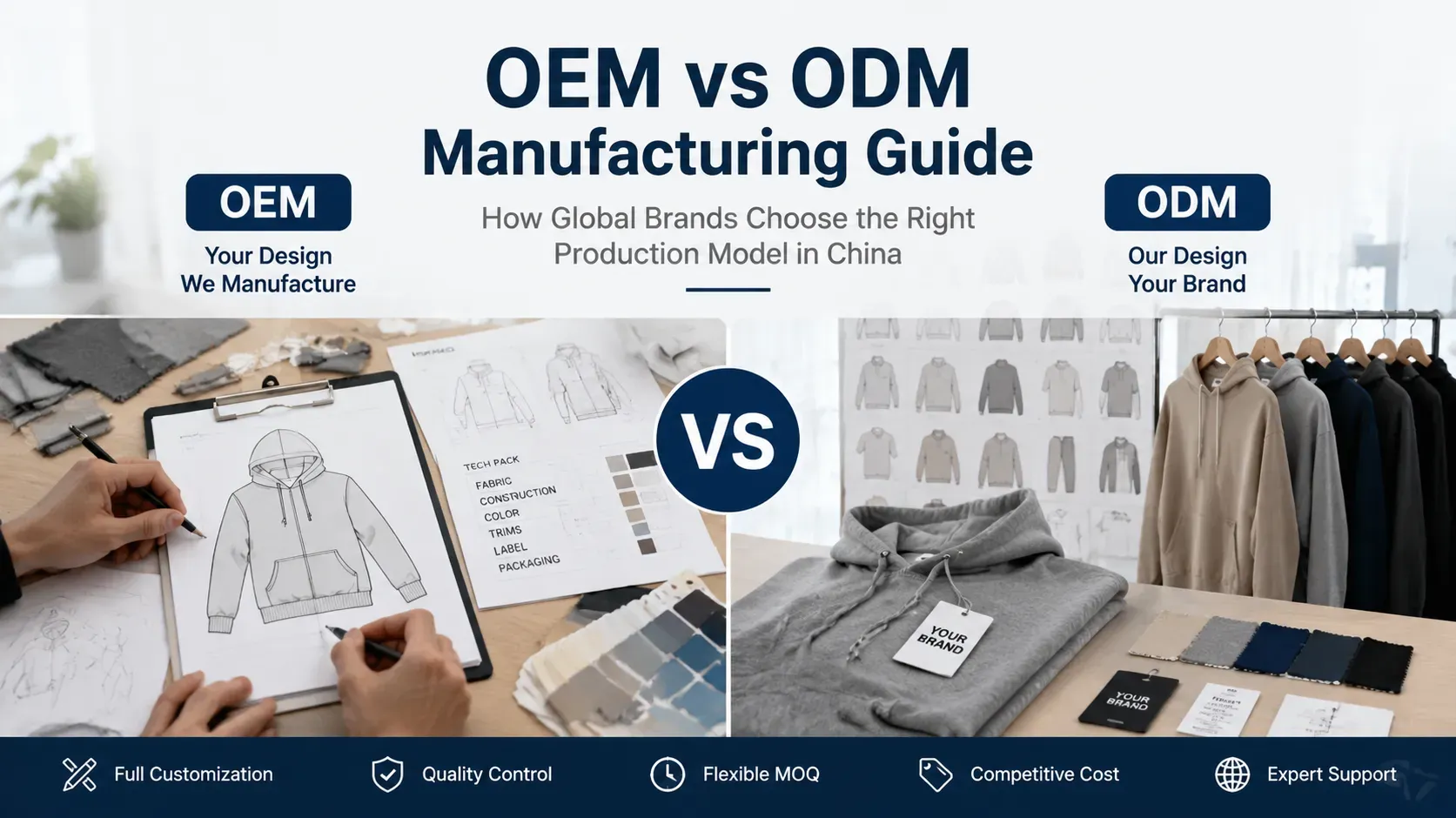
OEM (Original Equipment Manufacturing) means a manufacturer produces products based on the buyer's own designs, specifications, and requirements.
In an OEM project, the brand usually controls the product concept and provides detailed requirements, while the manufacturer handles production.
Typical OEM requirements include:
- Product design
- Technical specifications
- Fabric selection
- Measurements
- Color requirements
- Labels and packaging
For example, a fashion brand may provide a hoodie design with specific requirements:
- 400GSM French Terry fabric
- Oversized fit
- Custom embroidery
- Private label packaging
The manufacturer develops samples and produces the final products according to the approved specifications.
Advantages of OEM Manufacturing
Full Product Customization
The biggest advantage of OEM manufacturing is complete control over the final product.
Brands can customize:
- Fabric composition
- Product construction
- Fit and measurements
- Colors
- Trims
- Packaging
This allows companies to create products that match their unique brand identity.
Strong Brand Differentiation
OEM manufacturing is ideal for brands that want unique products rather than standard market designs.
It is commonly used by:
- Established fashion brands
- Private label companies
- Retailers with their own collections
Because the product is developed according to the buyer's requirements, brands can create stronger market differentiation.
Suitable for Long-Term Product Development
OEM is often preferred by companies that already have:
- Product concepts
- Design teams
- Market knowledge
- Clear quality requirements
These brands usually want more control over their supply chain and product direction.
What Is ODM Manufacturing?
ODM (Original Design Manufacturing) means manufacturers provide existing product designs or development solutions that buyers can customize and sell under their own brand.
Instead of creating a product completely from zero, buyers can select existing styles and modify specific details.
ODM customization may include:
- Fabric changes
- Colors
- Logo placement
- Labels
- Packaging
ODM allows brands to develop products faster while reducing initial development requirements.
Advantages of ODM Manufacturing
Faster Product Development
Because manufacturers already have product experience and existing designs, ODM can significantly shorten development time.
This is helpful for brands that want to:
- Launch collections quickly
- Test new markets
- Expand product categories
Lower Development Costs
Compared with completely customized OEM projects, ODM usually requires less investment in:
- Product research
- Initial development
- Sampling preparation
This makes ODM suitable for:
- Startup brands
- Small businesses
- New fashion companies
Access to Manufacturer Experience
Experienced ODM manufacturers understand:
- Market trends
- Fabric performance
- Production techniques
- Cost optimization
Brands can use manufacturer expertise while maintaining their own branding.
OEM vs ODM Manufacturing: Key Differences
| OEM Manufacturing | ODM Manufacturing |
|---|---|---|
Design Source | Buyer provides designs | Manufacturer provides designs |
Customization Level | High | Medium |
Development Time | Longer | Faster |
Cost Investment | Higher | Lower |
Product Uniqueness | High | Moderate |
Best For | Established brands | New brands and retailers |
OEM or ODM: Which Manufacturing Model Should Your Brand Choose?
The right choice depends on your business stage and product strategy.
Choose OEM Manufacturing If You:
OEM is suitable if you:
- Have your own designs
- Need full customization
- Require unique products
- Have detailed technical requirements
- Want complete control over development
For brands building a unique collection, OEM provides greater flexibility.
Choose ODM Manufacturing If You:
ODM is suitable if you:
- Need faster product launches
- Want lower development costs
- Are entering a new category
- Need manufacturer design support
ODM provides a practical solution for brands that want efficiency and flexibility.
OEM and ODM Apparel Manufacturing in China
China offers a complete apparel manufacturing ecosystem, including:
- Fabric sourcing
- Pattern development
- Sampling
- Production
- Quality control
- Export support
For fashion brands, choosing an experienced manufacturing partner can simplify the entire product development process.
During product development, professional manufacturers help brands transform ideas into finished products through sampling, material selection, and production preparation.
Quality Control in OEM and ODM Manufacturing
Regardless of choosing OEM or ODM, quality management is essential.
A reliable manufacturing process should include:
Material Inspection
Checking:
- Fabric composition
- Fabric quality
- Color consistency
Production Monitoring
Following:
- Production progress
- Product specifications
- Manufacturing standards
Final Inspection
Before shipment, products should be checked for:
- Appearance
- Measurements
- Packaging
- Quantity
Professional quality control support helps international buyers reduce production risks and maintain consistent product standards.
How SML Supply Supports OEM and ODM Projects
SML Supply is a China-based apparel manufacturing and sourcing company helping global buyers develop customized products.
Our support includes:
OEM Manufacturing
Supporting brands with:
- Custom designs
- Fabric sourcing
- Sample development
- Production coordination
ODM Development
Helping brands:
- Select suitable styles
- Modify existing designs
- Develop new collections
Private Label Solutions
Supporting:
- Custom labels
- Packaging
- Brand-specific products
Export Support
Helping buyers manage:
- Supplier communication
- Production coordination
- Shipment preparation
Our Export Support service helps buyers coordinate shipment preparation, supplier communication, and export requirements after production.
Common Questions About OEM and ODM Manufacturing
Is OEM more expensive than ODM?
OEM usually requires more product development and customization, so the initial cost may be higher. ODM can reduce development costs by using existing product solutions.
Can small brands use OEM manufacturing?
Yes. Many small and growing brands use OEM manufacturing, especially when they need unique products and flexible order quantities.
Is ODM manufacturing suitable for fashion brands?
Yes. ODM can help fashion brands launch products faster while benefiting from manufacturer experience.
Which is better, OEM or ODM?
Neither model is always better. The right choice depends on your design requirements, budget, timeline, and business goals.
Conclusion: Choosing the Right China Manufacturing Partner
OEM and ODM manufacturing provide different advantages for global brands sourcing from China.
OEM offers maximum customization and product control, while ODM provides faster development and lower entry barriers.
Before choosing a manufacturing model, brands should evaluate:
- Product requirements
- Development resources
- Target market
- Production expectations
Working with an experienced China apparel manufacturing partner can help brands reduce risks and build reliable long-term supply chains.
About the Author
Connor Ma
Founder of SML Supply
Connor Ma is the Founder of SML Supply, a China-based apparel manufacturing and sourcing company specializing in knitwear, private label clothing, OEM manufacturing, and ODM product development for global brands.
Through SML Supply, Connor supports international buyers with product development, supplier coordination, quality management, and export solutions.
About SML Supply
SML Supply helps global buyers source apparel products from China through:
- OEM manufacturing
- ODM development
- Private label solutions